by Karen Yvonne Hamilton, 2025
Author Thomas Wolfe’s editor Maxwell Perkins asked the man who gave him Wolfe’s first novel, “Is it any good? The man answered, “No. It’s unique.”
This makes me wonder:
Who are the “unique” writers of this age we live in now?
I love Steinbeck, Wolfe, Faulkner, Eliot because they were “unique.”
What makes a classic novel? Are they not formulaic? They all follow the plot diagram. Yet the classics go a bit further; they are what one person termed ‘unique.’ What makes a novel unique? There are all these dynamics of a novel that determine whether it is ‘good’ or not. The masses seem to want the formula. The publishers seem to want the formula.
I have been reading a lot of novels lately, trying to figure out why I like one over another. I have several shelves full of novels that I couldn’t finish because they just didn’t have that unique factor. They just plodded along in a predictable fashion. You know that every story will have two characters who fall in love (the romantic interest). You know the two characters who hate each other in the beginning will end up falling in love. You know these characters will make choices that screw up their relationship at least twice in the story. You know that forces will come between them over and over.
Plot twists and conflicts. The story is driven by them; they are necessary; they are true in the sense that our lives are full of plot twists and conflicts. Readers can identify. Readers like to identify. The problem is when all these twists are so formula driven that readers such as myself can predict the moments where they will occur because, well, because the author is adhering to the formula.
Guilty myself. Working on Other Rivers and following the formula. I found myself yesterday agonizing over one chapter because it didn’t fit neatly into the formula. Hardly unique.
This is life. Messy and unpredictable. Isn’t that enough to make a story? We all know that good happens then bad happens then good again then bad again. It’s life. But it is hardly predictable. So why must a story we make up be predictable? I think what makes a story unique is that it does not follow the formula; it veers all over the place just like life does. It is not predictable.
Will I finish Other Rivers? Maybe. Maybe not. I see no way to make it unpredictable. It is a historical novel and needs the formula frame. It flexes my creative muscles though. It allows me to do some research, which I enjoy. And I imagine that many readers will enjoy the story and not even notice the formula.
Where are these kinds of genius writers today? I want to read them!
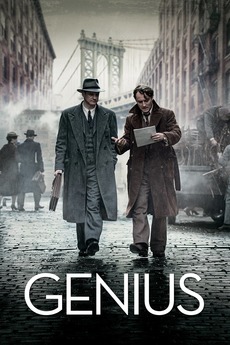
The movie, Genius, is a fascinating look into writing, writers, and publishers. It is described as “a stirring drama about the complex friendship and transformative professional relationship between the world-renowned book editor Maxwell Perkins (who discovered F. Scott Fitzgerald and Ernest Hemingway) and the larger-than-life literary giant Thomas Wolfe.”
Death of a Genius: The Last Days of Thomas Wolfe by Hans Meyerhoff.
 Other Rivers
Leave a comment