
Karen Yvonne Hamilton, 2025
This is not your typical post-apocalyptic novel. Yes, it is set at the ending of the world as we know it. There is the run on the banks, the looting at the stores, and the hoarding of peanut butter. But these things are all background, none become major scenes. The main character is Ojibwe (but raised by non-native parents) pregnant woman, Cedar, struggling to find her identity in a world fast moving backwards. She notes that, “The first thing that happens at the end of the world is that we don’t know what is happening.” There is no running and screaming and killing, no zombies, no chaos. Just a quiet sky and people looking up and saying, “What’s going on?”
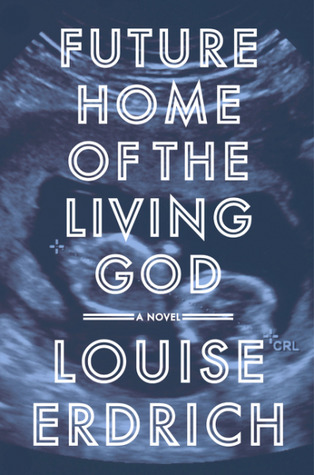
This is a description of the novel, “a 2017 dystopian novel by Louise Erdrich, told from the perspective of Cedar Hawk Songmaker, a young, pregnant woman in a near-future America where evolution is reversing and women are being rounded up by the government due to a new law. The story follows Cedar as she seeks her birth mother and grapples with her own impending motherhood amidst societal collapse, exploring themes of female agency, identity, and survival in a world where women’s rights are being stripped away.”
The characters are not built on their panic and fight to survive impending doom; they are rather thoughtful humans (as most of us are) who delve deep into the human condition and ponder the deeper issues in this world. I think that is the best part of this novel; the characters are fully formed and developed. They are not just thinking about surviving the day; they are questioning and considering their place in the larger scheme of the universe.
There is something to be said for just surviving, I suppose. But is that really living? My father and I used to have endless discussions on why we are here and what is the purpose in all of this life stuff.
And where is God in all of this ending of the world? As the world encounters a reversal of evolution, Cedar wonders, Perhaps “we we are an idea then. Maybe God has decided that we are not worth thinking anymore.” We all wonder that sometimes; where has God gone?
As evolution, a concept that many in the novel are just beginning to believe is a real thing, given what is happening around them, winds backwards, Cedar realizes that perhaps this is not an ending of the world, but a beginning of something new. She says,
We are so brief. A one-day dandelion. A seedpod skittering across the ice. We are a feather falling from the wing of a bird. I don’t know why it is given to us to be so mortal and to feel so much. It is a cruel trick, and glorious.
This novel is not about the end of the world; it is about the many lives that we live in our brief lifetimes and how we can choose to see each ending as a beginning to the next life. It is an amazing canon for living in the moment and embracing the changes that are forever happening.
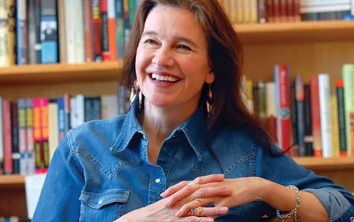
Interview with Louise Erdrich (about writing this novel)
by Christian A. Coleman. Published in Dec. 2017 of Lightspeed Magazine (Issue 91)
https://www.lightspeedmagazine.com/nonfiction/interview-louise-erdrich/
 Other Rivers
Leave a comment