
by Karen Yvonne Hamilton
I woke up this morning thinking about … well, I had intended to write about it, but I can’t remember now what it was. It was something trivial that we don’t really think about much, but it was interesting. A digression. I do like digressions. Maybe I will remember it as I write.
Ah! Laugh track! That was it. Do sit-coms have laugh tracks these days? It is interesting that we have spent decades watching shows with laugh tracks yet we don’t seem to notice them. I notice them now because I use the TV turned down very low to go to sleep and the laugh tracks are louder so they disrupt the white noise of people murmuring that I am seeking. I choose shows that aren’t so obnoxious with the canned laughter.
So just why do networks use laugh tracks anyway? And is it all fake or are they prompting the audience when to laugh? Off we go to Google it.
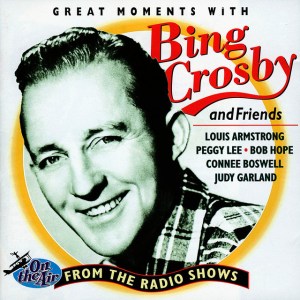
The first time the laugh track was used was by Bing Crosby in the 50s. Crosby’s radio show was pre-recorded using new technology, the tape recorder. When comedian Bob Burns came on his show, producers used the laughter that they got from his jokes (which ended up being cut in the version that went out to the public) to create a ‘laugh track.’
I found a website that plays some episodes from Friends, Seinfeld, and The Big Bang Theory with the laugh track removed. I never would have thought it, but it’s true; the jokes just don’t come across right without the laugh track. It’s kind of creepy actually.
Several websites on the history of the laugh track mention the ‘communal experience,’ which is basically that we tend to laugh more in a social setting. So, by hearing other people laugh, we are more likely to enjoy the experience and laugh ourselves.
The laugh track goes way back to when TV shows began. Audiences were used to radio shows. Networks used (use) laugh tracks to simulate a live audience, a way to have viewers feel immersed in a live performance from the comfort of their sofas. The actors are trained to pause for this laughter, adjusting their performance to the audience’s reaction, which is often live in a studio.
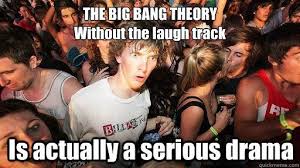
So, do we need producers to tell us what is funny and when to laugh? Some say No Way! Others enjoy the experience of feeling like they are at a live performance. That’s what they say anyway. Are we really that dense that we can’t tell when and where to laugh? Hmmm…I wonder. Apparently, I do because those clips without the background laughter really did fall flat.
I’m not an actor or a filmmaker, so I really can’t speak to the reasoning behind the performances. My biggest beef with the laugh track is that it is too loud and too intrusive. Make it a part of the scenery if it is needed; make it not jar me out of my seat and scrambling for the remote to lower the volume. The same goes for commercials. Don’t get me started on those.
You probably don’t even notice the laughter, whether it’s canned or live, and now I have drawn your attention to it. Sorry about that. My mind wanders into strange topics from time to time.
If you want to read more about the history of the TV laugh track, you can check out these websites below or just Google it like I did. ha ha. I laughed there but you didn’t hear it. Did you laugh anyway? Hmmmm…
The history of the laugh track
Where does canned laughter come from – and where did it go?
The Social Politics of the Laugh Track
Okay, that’s enough digressions for today. I am really just trying to hit my 750 words a day quota so my computer will do the confetti thing it does.

 Other Rivers
Leave a comment